
Used Water Rower Assessment: Verify Value & Condition
By Aaliyah Mensah • 3rd Dec
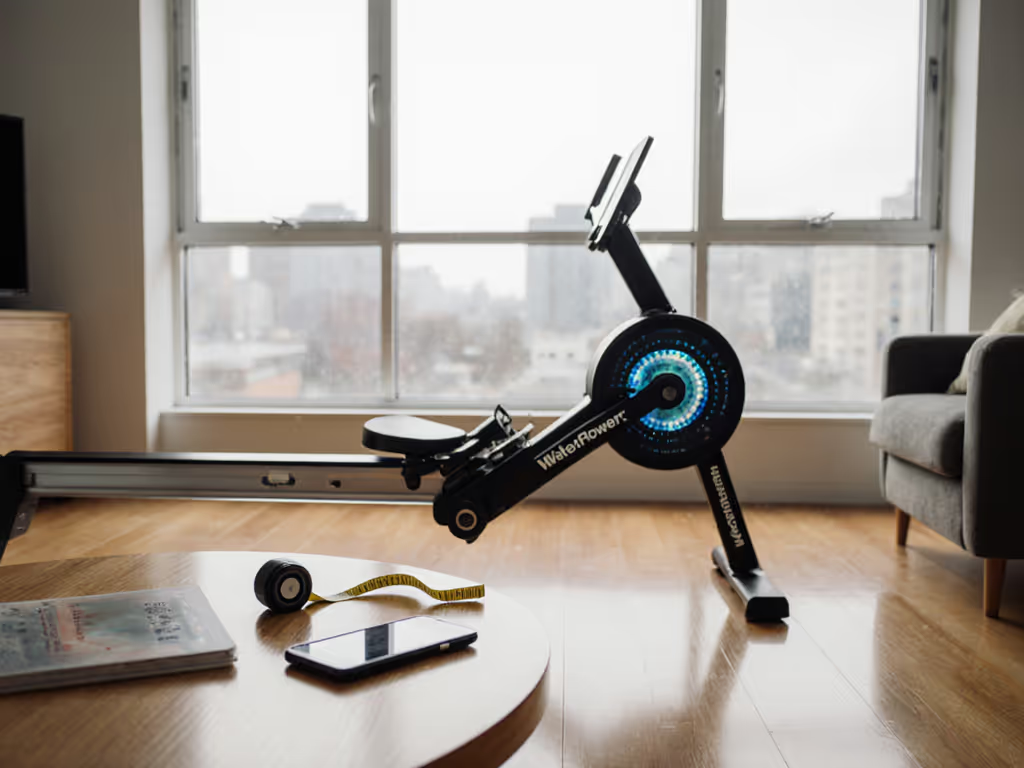
When hunting for a water rowing machine used, the sticker price should only be your starting point, not your destination. True value reveals itself in the cost per reliable session, not the initial outlay. A savvy second-hand rower guide focuses on durability, support pathways, and long-haul reliability. That water rower collecting dust in your apartment won't pay for itself through acquisition cost alone. Let's dissect how to verify if a used model delivers real value or hidden liabilities.
Cost per session beats MSRP
The Pre-Purchase TCO Audit: Depreciation Curves Don't Lie
Before inspecting a single weld, analyze the market's depreciation and resale curve. This isn't guesswork, it's actionable data. Check current new prices (e.g., WaterRower Classic starts at $1,199) against local used listings. A steep drop signals either market saturation or known reliability issues. For instance, pre-2015 WaterRower models often sell for 30-40% of new value, while well-maintained Concept2 Model Ds (air resistance) retain 65%+ value due to service infrastructure. Water rowers occupy a middle ground: their wooden frames age gracefully, but tanks and seals degrade.
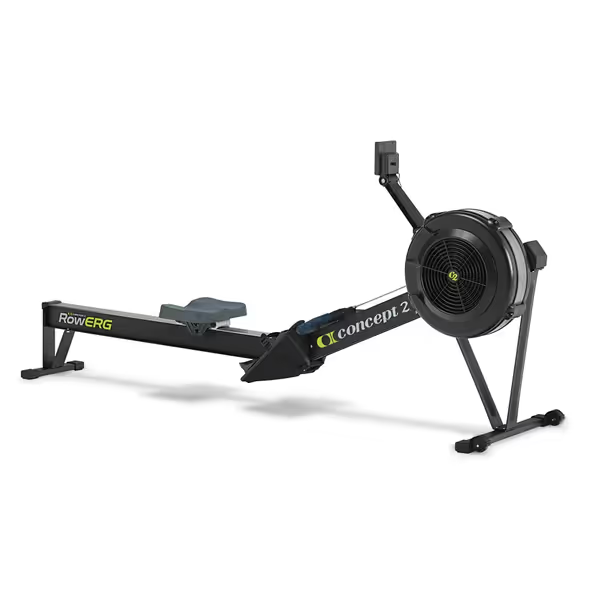
Concept2 RowErg
Accurate, smooth, and quiet full-body workout with open app connectivity.
$990
ConnectivityPM5 Monitor (Bluetooth & ANT+)
ConnectivityPM5 Monitor (Bluetooth & ANT+)
Pros
Precise metrics for progress tracking & competitive use
Smooth, full-body workout with minimal flywheel noise
Splits in two for easy, apartment-friendly storage
Cons
Air resistance isn't silent, some ambient noise
Customers find this rowing machine to be of excellent quality, with one noting it takes only 8 screws to assemble. The machine provides a full-body workout and is particularly effective for interval training, while being quieter than expected for its engineering. Customers appreciate its smooth operation, with one describing it as \"smooth as silk,\" and consider it a worthwhile investment, with one mentioning it works perfectly out of the box.
Customers find this rowing machine to be of excellent quality, with one noting it takes only 8 screws to assemble. The machine provides a full-body workout and is particularly effective for interval training, while being quieter than expected for its engineering. Customers appreciate its smooth operation, with one describing it as \"smooth as silk,\" and consider it a worthwhile investment, with one mentioning it works perfectly out of the box.
Your checklist for this phase:
- Track 10 local listings for identical models (e.g., WaterRower S4 monitor era vs. older analog)
- Calculate depreciation rate: (new price - used price) ÷ new price × 100
- Investigate brand parts support: WaterRower still sells tank seals and paddles (critical for TCO math)
- Note if sellers include service records, a rarity that slashes future maintenance costs
A machine losing 50% of value in 3 years isn't automatically bad. Context matters: if it's a $300 pickup for a rarely used model, it might yield lower cost per session than a $700 "bargain" needing $200 in immediate repairs. My first scuffed Craigslist rower taught me this (logging failures revealed some tanks outlasted their frames).
Pre-Owned Rower Inspection: Water-Specific Red Flags
Water resistance rowers introduce failure points air/magnetic models avoid. Your pre-owned rower inspection must prioritize these:
Tank Integrity & Fluid Health
- Seal Failure Test: Tilt the tank 45 degrees. No drips? Good. Persistent leaks mean seal replacement ($15-$40 part + labor). Critical for apartment dwellers, water damage sinks resale value faster than anything.
- Water Clarity: Murky fluid indicates neglected maintenance. Algae or gunk increases friction, mimicking "stiff resistance" but actually accelerating wear. Clear water with blue tablets? Signs of care.
- Bungee Cord Condition: Check the elastic cord connecting handle to tank. Fraying or exposed elastic ("cat-in-bath" frizz, per Dark Horse Rowing's guide) means imminent replacement. These fail at 200-300 hours, so factor $25 parts into your TCO. For step-by-step upkeep on seals, water tablets, and tank cleaning, see our water rower maintenance guide.
Frame & Vibration Damage
- Rail Wobble: Sit on the seat and wriggle your butt. Lateral movement? Unacceptable. Wooden rails (common in WaterRowers) crack under vibration, especially if used without a mat on hardwood/concrete. If apartment noise is a concern, compare water vs magnetic rower noise before you buy used. Look for stress fractures near footrest mounts.
- Leg Stability: Shake the frame vertically. Play suggests loose bolts or cracked wood joints. In older buildings, vibration damage often starts here, exactly the pain point for urban renters fearing neighbor complaints.
Hidden Wear in Water Systems
Unlike air rowers, water tanks obscure internal wear. Tip: Inspect the paddle assembly through the tank opening. Paddles should be intact, not chipped or warped. Warping causes uneven resistance and loud "thumping" during drives. Also check the water level tube: Cloudy or scaled-up tubes indicate infrequent cleaning, risking sensor errors in digital monitors.
Smart buyers track these metrics:
| Component | Healthy Sign | Critical Red Flag | Avg. Repair Cost |
|---|---|---|---|
| Tank Seal | Dry seams after 24h tilt | Persistent drips | $15-$40 + 30 min labor |
| Bungee Cord | Uniform blue sheath | Visible elastic fraying | $25 |
| Paddles | Smooth rotation | Chipping/warping | $30+ |
| Rail | Zero lateral play | Visible cracks near mounts | $50+ (frame damage) |
Negotiation Tactics: Using Condition as Leverage
Armed with your used rowing machine red flags analysis, negotiate strategically. That $500 WaterRower might need $150 in parts, but don't accept "as-is" pricing. Reference specific findings:
- "I'll pay $425 if you replace the bungee cord before pickup"
- "I'll cover cleaning supplies if you document the tank seal replacement history"
Vintage rower value hinges on completeness. Missing oars, foot straps, or monitor manuals? Deduct 10-15%. Prioritize machines with original packaging, wooden water rowers are nightmares to return. Crucially, never skip the test row. Listen for:
- Gurgling sounds (air in tank lines)
- "Grinding" at the drive (paddle misalignment)
- Sudden resistance spikes (bungee failure)
Refurbished Rower Reality Check: When Is It Worth It?
Sellers often tout "refurbished" status, but buyer beware. Authentic refurbishment includes:
- New tank seals/bungee
- Rail lubrication
- Monitor calibration
- Frame reinforcement at stress points
If they can't detail exactly what was refurbished, assume it's cosmetic only. For refurbished rower buying tips, demand photos of replaced parts. A legitimate refresh should add $50-$100 to the price, not double it. Remember: WaterRower's parts catalog is robust, but labor costs eat savings fast. If a $300 rower needs $120 in parts, your TCO math flips from "bargain" to "break-even at 200 sessions."
Final Verdict: The Session-Value Rule
Buying a used water rower solely for the discount is a trap. Value emerges from sessions delivered per dollar invested. A $400 machine requiring $150 in parts to deliver 1,000 smooth sessions beats a $550 "mint" unit that fails after 300 sessions due to hidden tank leaks. Always prioritize:
- Seal integrity (water-specific failure point)
- Frame stability (vibration resistance for apartment living)
- Parts accessibility (WaterRower's 40-year supply chain vs. defunct brands)
For urban professionals, a well-vetted used water rower solves noise and space constraints if vibration is managed (use a 1/2" anti-fatigue mat). To minimize vibration and keep your setup tidy, consider these rower accessories for noise reduction and storage. But chase long-haul reliability, not Craigslist allure. As my first ledger proved: Pay once, maintain smartly, and your rower pays you back. When your cost per session drops below $0.50 while neighbors sleep undisturbed, you've mastered the math.
Cost per session beats MSRP
Related Articles
Comparisons & Buying Guides
Adaptive Rowers for Parkinson's: Balance & Tremor Focus
30th Jan•7 min read