Expert Reviews of Rowing Machines
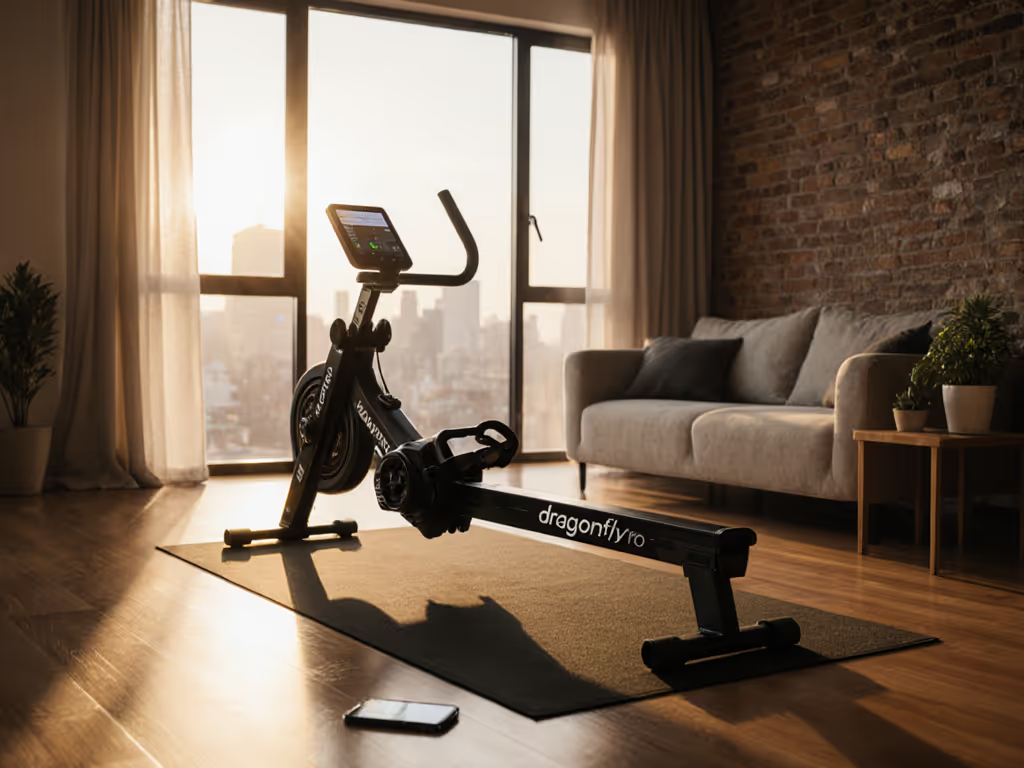
Yosuda Dragonfly Pro Review: Quiet, Compact, Subscription-Free
8th Apr•11 min read
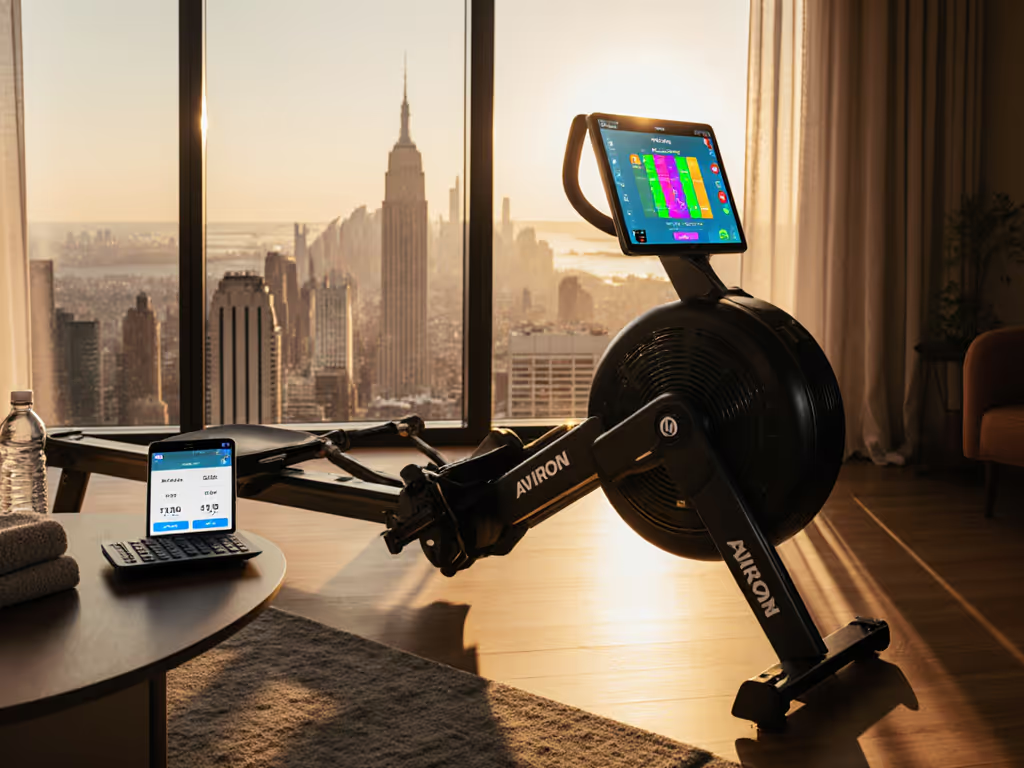
The Aviron Strong Series review reveals a machine caught between ambition and expense. At $2,199-$2,499, this smart rowing machine delivers genuinely impressive hardware - a quiet dual air-magnetic system, a 507-pound weight capacity, and slick onboard coaching - but wraps it in a subscription model that asks you to keep paying indefinitely. The real question isn't whether this rower can deliver a good workout. It's whether the gamified experience justifies the premium, or whether you're paying for polish you'll stop using within six months. Let me work through the actual math, because that's where the story gets honest.
The Strong Series is Aviron's flagship offering, replacing their older Tough model. Here's what ships in the box: an aluminum frame weighing 113.5 pounds, a dual resistance system (air and magnetic combined), a 22-inch rotating touchscreen, adjustable footplates, and a nylon belt drive. The machine measures 84 inches long and stores upright using front transport wheels.
The resistance capacity peaks at 100 pounds of force across 16 levels, with levels 1-10 intended for cardio work and 11-16 designed for pure strength efforts. The touchscreen displays eight categories of workouts - over 500 total sessions - and the software auto-adjusts resistance during programmed sessions. You also get a 1-year parts warranty plus a 10-year structural warranty on the aluminum frame.
The standout ergonomic choice here is the unusually high seat position. Most rowers force users into a deep squat that strains hips, knees, and ankles - a particular burden for people with mobility concerns. The Aviron's elevated seat geometry spares that strain. Combined with adjustable footplates (width and length, which is rare) and a 20-inch seat width, this machine actually tries to fit different bodies.
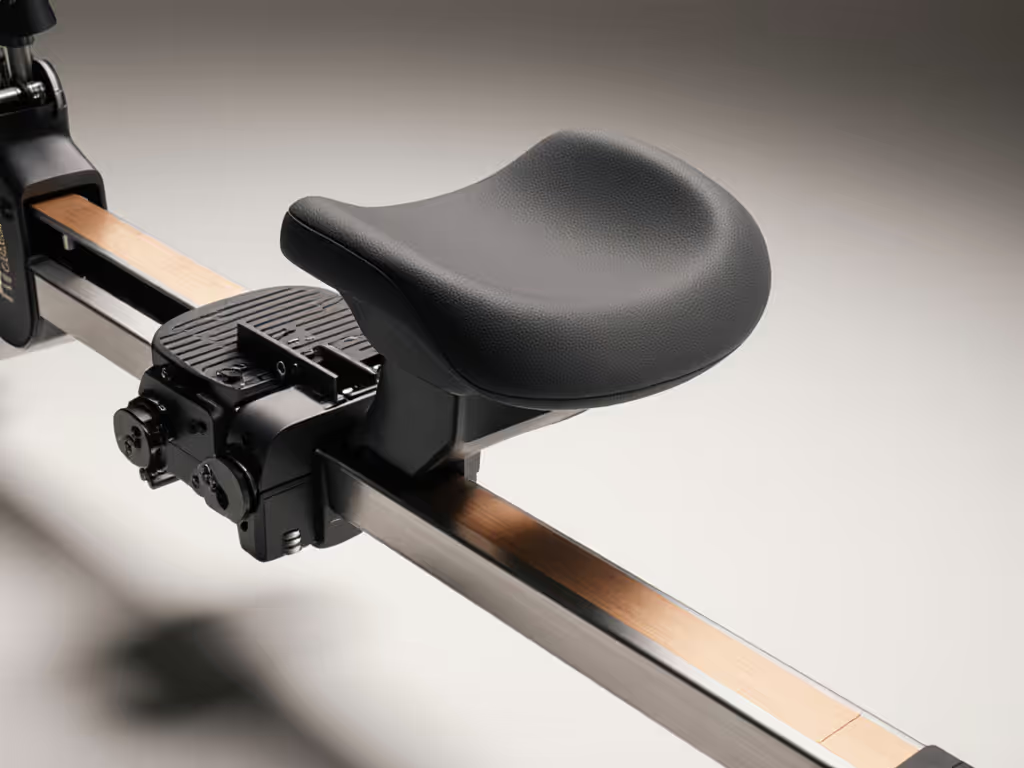
The frame is aluminum, not steel, which keeps weight down while maintaining rigidity. Users report smooth, stable strokes even during sprints, with the nylon belt drive producing minimal noise - a huge advantage over chain-driven or magnetic-only machines in apartment settings. That quiet operation is real and worth testing before purchase; it directly solves a top pain point for shared living spaces. For measured dB levels and vibration data across popular rowers, see our apartment rower noise tests.
Here's where the math turns uncomfortable. Aviron's subscription model gates most of the promised content behind a recurring fee. The machine includes some free workouts, but the full library, live classes, leaderboard racing, and coaching require an active membership. Industry rates for app-based rowing typically run $20-$40 per month. For the Aviron ecosystem, that's a hidden second mortgage on your rower. To see how different platforms' fees stack up over time, read our rower subscription value comparison.
Let's say you commit to $30 per month (a conservative middle estimate). Over five years - a reasonable machine lifespan for moderate home use - that's $1,800 in app fees stacked on top of your $2,300 hardware cost. Your total investment hits $4,100 before factoring in power, replacement parts, or accessories like the optional Cloud Seat upgrade or Quick Adjust Remote Control (which BarBend reviewers found essential for usability).
Now consider: many of your audience members use Apple Fitness+, Kinomap, or free YouTube coaching on their existing tablets or TVs. They like choosing their content source, not being locked into a single proprietary app. The Aviron's 22-inch screen is beautiful, but it runs Aviron's software, not your preferred ecosystem. That's the friction point. Cost per session beats MSRP, but only when the session tooling is genuinely flexible - and here, it isn't.
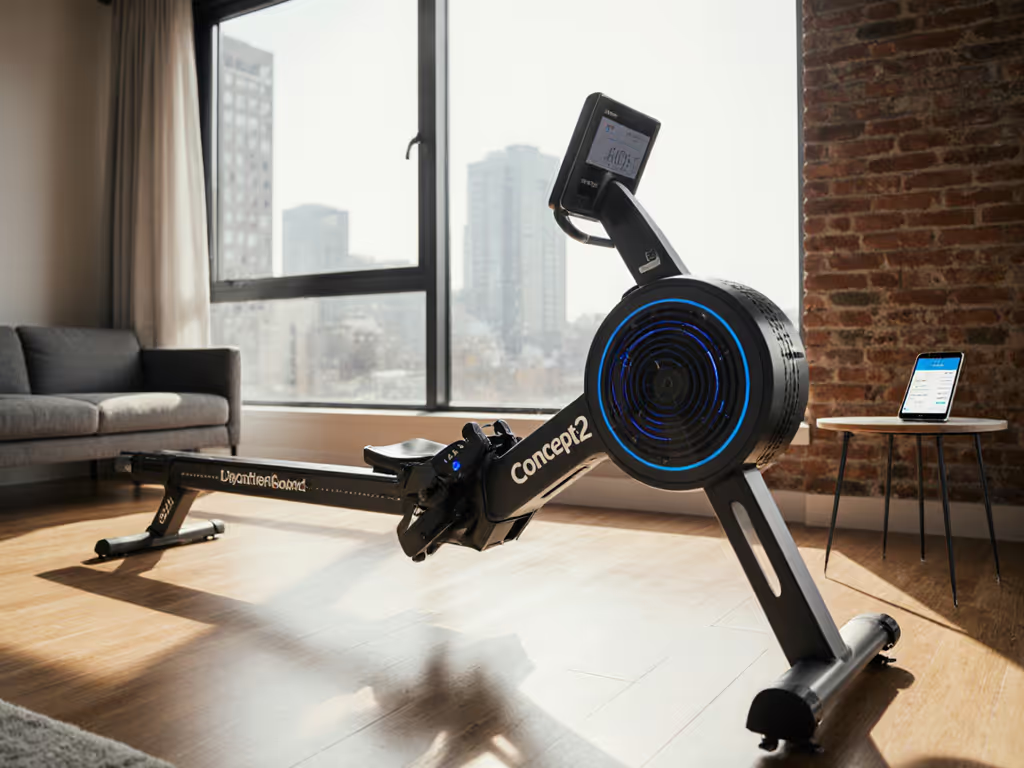
For comparison, open-standard rowers like Concept2 models cost less upfront, offer zero subscription requirements, and integrate with Zwift, Apple Health, Strava, and a dozen other platforms via standard ANT+ and Bluetooth FTMS protocols. You lose the flashy game-led interface, but you gain autonomy and lower marginal costs.
To properly evaluate this machine, I model the total cost of ownership (TCO) across five years, factoring in purchase price, power consumption, anticipated maintenance, and depreciation.
Initial Purchase: $2,300 (mid-range)
Monthly Subscription: $30 × 60 months = $1,800
Power Consumption: Aviron rowers draw minimal power (mostly the touchscreen and motors). Estimate ~$50/year = $250 over five years.
Maintenance & Minor Parts: Nylon belts and air valves degrade over heavy use. Aviron's service path is direct (parts available through the brand and authorized dealers), but out-of-warranty replacement parts (seat bushings, rollers, belt) typically run $80-$250 each. Budget $400 for preventive maintenance and replacements over five years.
Warranty Reality: The 10-year frame warranty is genuinely strong - you're covered for structural failure. The 1-year parts warranty is standard industry-wide, leaving you exposed after 12 months. That means year-two failures fall on you.
Total Five-Year TCO: ~$4,750
Now divide by sessions. If you average 100 sessions per year (just under twice weekly - realistic for sustained home users), that's 500 sessions over five years. Cost per session: $9.50.
For context: a $600 Concept2 Model D with zero subscription costs roughly $1.20 per session over the same timeline. A $1,200 mid-tier Hydrow or NordicTrack model with a $15/month sub costs about $3 per session. The Strong Series hits $9.50 because of the subscription stacking and the high hardware cost.
The question isn't whether $9.50 is expensive in absolute terms. If you're replacing a $180-per-month CrossFit gym membership or $35-per-class boutique rowing studio visits, this is a steal. But if you already own a $600 rower or can access free YouTube coaching, the delta is hard to justify.
Aviron publishes impressive specs: the machine weighs just 113.5 pounds yet supports a 507-pound maximum user weight - nearly a 4.5:1 ratio. That density of engineering reduces failure rates for structural elements. Users report zero squeaking, shimmy, or seat-rail drag even during high-cadence efforts.
The aluminum frame won't rust, and the nylon belt drive - versus chain or fan-based systems - has predictable wear curves. Nylon belts typically last 1,500-2,500 hours of use. At 30 minutes per session, that's 3,000-5,000 sessions. For a twice-weekly user, you're looking at 5-10 years of service before a belt replacement (~$150 if DIY, more if serviced). That's excellent durability, not a failure risk.
But here's the service path reality: Aviron's repair ecosystem is narrower than Concept2 or WaterRower. You can't walk into a local sporting goods store or gym and find a technician. Service is direct-to-brand or through select authorized dealers. That matters if you need a repair shipped across the country or need someone to diagnose an issue quickly. In high-density urban areas, this is manageable. In rural settings or small towns, it's a liability.
The 10-year frame warranty is your safety net for structural failure. After that, you're self-insuring. Resale value for premium rowers like this typically holds 40-50% after five years if the unit is maintained well - so expect ~$1,150 in residual value, reducing your true five-year cost somewhat. For depreciation benchmarks and selling tips, see our rowing machine resale value guide. But that assumes a buyer values the Aviron ecosystem and is willing to inherit the subscription model.
For apartment dwellers and shared spaces, the nylon belt drive is a game-changer. BarBend, Garage Gym Reviews, and Live Science testers all noted a quiet flywheel and smooth, jarless stroke. No chain clank, no magnetic hum, no thud-thud-thud transmitted through thin floors.
The machine measures 84 inches long by 27 inches wide by 48 inches tall, making it one of the shortest full-size rowers on the market. For users under 5'10", this is perfect. For users 6'2" and taller, the 84-inch rail length can feel constricting - your legs won't fully extend, limiting power output and forcing a cramped finish position. That's a critical limitation your audience should test in person or via return policy before committing.
Upright storage is a legitimate space saver. The front wheels roll smoothly, and the collapsible touchscreen arm folds the footprint dramatically for a small apartment or dorm. That addresses a key pain point: you can actually hide this machine when not in use, unlike long rowers that dominate a living room.
Vibration transmission is minimal due to the aluminum frame's rigidity and the nylon belt's inherent damping. Pair it with a quality isolation mat (not included - budget an extra $40-$80 for a genuine exercise mat or yoga mat stack), and noise to downstairs neighbors drops significantly. That's a trustworthy solution, not marketing fluff.
The high seat and adjustable footplate width are standouts for bodies that typically struggle on rowers. People with knee pain, hip mobility issues, or prior injuries often find standard rowers unbearable; the Aviron's geometry genuinely helps.
For plus-size users, the 507-pound weight capacity is the highest-rated in the consumer rowing market, and the 20-inch seat width accommodates larger frames without compromise. No shame, no restriction - just engineering that assumes diversity.
The 19-inch rotating handlebar rotates to reduce wrist strain during long sessions, and the padded handle design reduces pressure hotspots - real quality-of-life upgrades tested by Live Science as "thoughtfully designed." That matters for 30-40 minute workouts where handle discomfort becomes a blocker for consistency.
The seat itself is padded plastic on the standard model. BarBend's reviewer paid extra for the optional Cloud Seat upgrade (firmness + plush padding) and called it worthwhile for session comfort. That's a $100-$150 add-on, pushing TCO higher but reflecting realistic user preferences.
For very tall users (6'3"+), the 84-inch rail remains a hard constraint. Your audience includes people up to 6'6" - this machine is not suitable for them without compromise.
Aviron's onboard metrics display power, splits, HR (if you pair a chest strap), and session data. The 22-inch touchscreen is responsive and the graphics are polished. But here's the gap: most fitness-forward users want their rowing data flowing to Apple Health, Garmin Connect, Strava, or their preferred wearable ecosystem.
Details on Bluetooth or ANT+ implementation are not clearly stated. If open device sync matters to you, compare models in our data freedom rowing machines guide. That's a red flag. If you can't pair your Apple Watch, Oura Ring, or Garmin HR monitor reliably, you're tethered to Aviron's closed data silo. The app might report your workout, but your HR data, VO2 proxy, or training load doesn't sync to your broader health picture. That's a control-and-autonomy loss your audience explicitly wants to avoid.
You need to verify this directly with Aviron before purchase: Does the Strong Series offer open ANT+ or FTMS connectivity? Or is data locked inside the Aviron app? If it's the latter, it's a significant usability disadvantage versus the Concept2 + Zwift ecosystem or a basic NordicTrack model with open Bluetooth.
The Aviron Strong Series makes sense if:
Look elsewhere if:
The Aviron Strong Series is exceptionally well-engineered hardware wrapped in an expensive, locked-in software ecosystem. The dual air-magnetic resistance is smooth and realistic, the touchscreen is beautiful, the ergonomics are thoughtful, and the quiet operation genuinely solves a top pain point for small spaces. On pure hardware durability and design, this machine is 4 out of 5 stars.
But the $2,300 price tag + $30/month subscription reality + closed data ecosystem creates a TCO burden that your analytically-minded audience will struggle to rationalize, especially if they already own a quality rower or can access free coaching. Cost per session beats MSRP, but the Aviron's session cost - stacked with app fees - sits at the premium end of the market.
If space, noise, and ergonomic customization are your pain points and you have the discretionary budget, this is a defensible choice. You're paying for quiet, compact engineering and supportive coaching. But if you value autonomy, open connectivity, and long-term value, you're better served by a Concept2 Model D ($650-$750) paired with Zwift or free YouTube coaching, or by a mid-tier NordicTrack machine ($1,200-$1,500) that offers some smart features without as aggressive a subscription model.
Pay once, maintain smartly, and your rower pays you back - but only if the cost structure actually favors you. For this audience, the Aviron Strong Series passes the engineering test. It fails the autonomy and long-term value test. Choose based on which matters more to your specific situation.