
Evolution of Rowers: Comfort-First Tech History
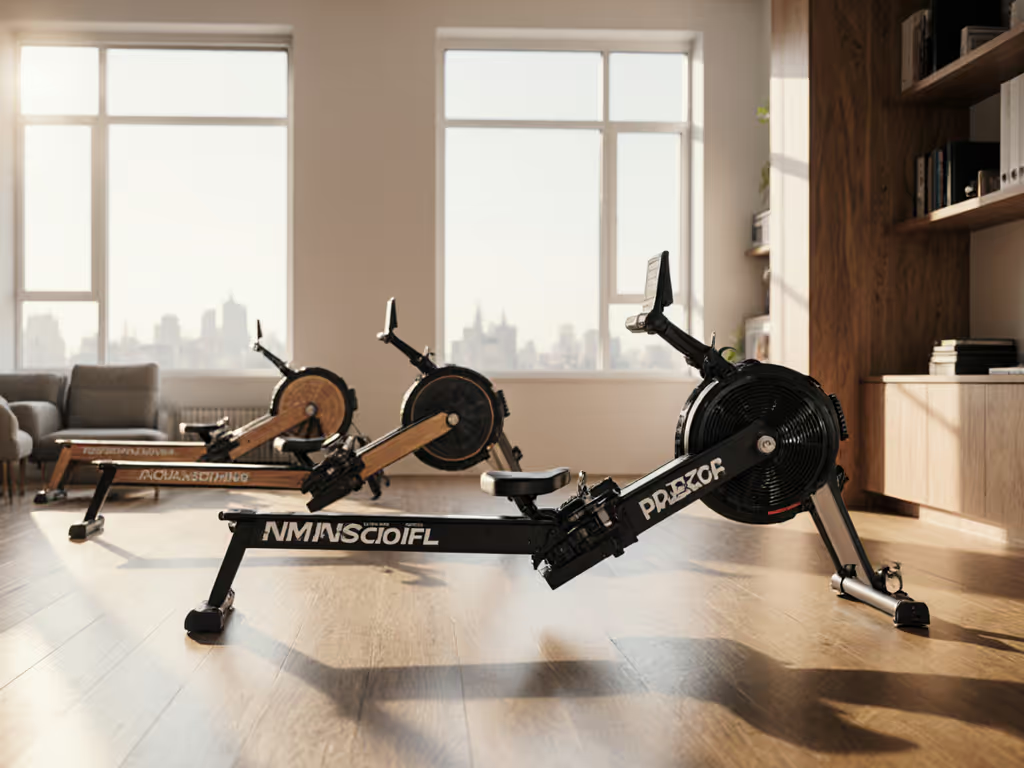
When we examine the evolution of rowers, it's clear the most significant advancements aren't just about power metrics; they're about designing rowing machine trainer systems that accommodate human bodies over time. Early machines prioritized mimicking water resistance, but modern innovation has shifted toward measurable ergonomics that transform occasional workouts into sustainable habits. The journey from rigid wooden frames to adjustable interfaces proves comfort isn't subjective: it's quantifiable.
From Military Training to Living Room Necessity
The earliest rowing simulators date back to 4th century BC Athens, where Admiral Chabrias implemented them for naval training. These rudimentary wooden structures focused purely on motion replication, with no consideration for fit variability. Fast forward to 1872 when W.B. Curtis patented a hydraulic-based damper design featuring a flywheel and ratchet system (the first attempt at measuring effort, though with minimal attention to user dimensions).
Comfort you can measure becomes consistency you can trust.
Throughout the 1900s, hydraulic trainers like the Narragansett (1900-1960) dominated, but their fixed geometries caused inconsistent stroke mechanics across different body types. The 1968 Nordic Finland Tangtel single-cylinder hydraulic rower improved resistance feel but still treated all users as identical. When Concept2 introduced the Model A in 1981, they revolutionized quantification with accurate performance metrics, but the interface remained largely static.
The Quiet Revolution: Measuring Comfort Metrics
A critical shift began in the 1990s when manufacturers recognized that consistency depends on adjustability, not just calibration. The "Aha" moment came when engineers started measuring hip angles at the catch (ideally 60°-75°) and ankle dorsiflexion (15°-20°) rather than assuming one rail height fit all. For a step-by-step primer on technique, see our proper rowing form guide. This data-driven approach to comfort solved the nagging problem I experienced myself: a persistent back twinge that disappeared only after measuring and adjusting my hip-ankle relationship.
Modern rowers now incorporate rowing machine technological advances that translate these biomechanical insights into tangible features:
- Adjustable foot stretchers accommodating 2-inch to 5-inch differences in foot placement
- Rail height variations (0.5" to 2" increments) to maintain proper knee tracking
- Seat contour engineering reducing pressure points across diverse anatomy
- Handle diameter options minimizing grip fatigue during 20+ minute sessions
These aren't luxury features; they're essential metrics for urban dwellers sharing tight spaces. A 5'2" user and 6'4" partner can both achieve proper angle ranges in degrees without compromising stroke integrity, eliminating the "this machine doesn't fit me" barrier to consistent use.
WaterRower: Where Comfort Meets Historical Context
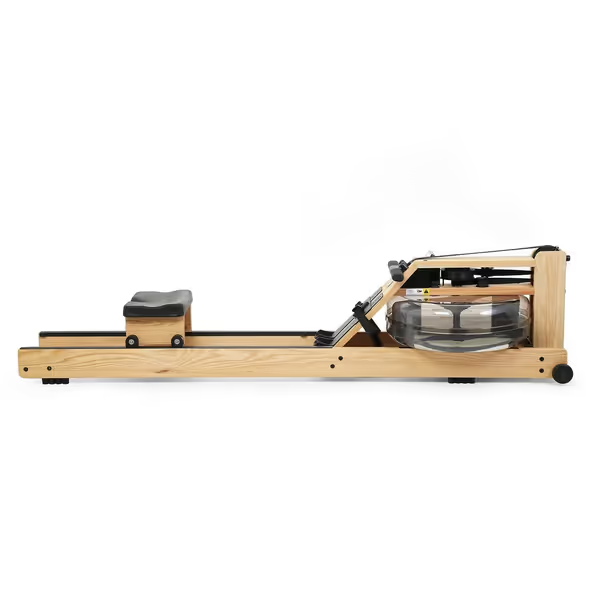
WaterRower Oak Rowing Machine
The WaterRower Natural's 1980s introduction represented a pivotal moment in historical rowing equipment evolution. While air rowers dominated performance metrics, WaterRower focused on fluid dynamics that naturally encouraged proper sequencing through water resistance's progressive curve. Their handcrafted oak frames weren't just aesthetic; they absorbed vibration, addressing contemporary pain points about disturbing neighbors in apartment buildings.
What made WaterRower stand out wasn't just the water tank, but their attention to interface points. The S4 monitor's introduction provided meaningful feedback beyond split times, and it helped users measure their stroke length consistency and handle height variance. For tall users with inseams over 34", the extended rail length maintained proper hip angle at the catch without requiring excessive spinal flexion.
The Modern Benchmark: Comfort That Removes Excuses
Today's traditional vs modern rowing machines comparison centers on how they address real-world constraints. Early models assumed users would tolerate discomfort for "authentic" training. Modern innovations prioritize measurable comfort through:
- Decibel-validated quietness (45-55dB range) for late-night/early-morning sessions
- Vibration-dampening materials critical for apartment dwellers over thin subfloors
- Compact footprint designs (under 8 ft length) with easy vertical storage
- Bluetooth FTMS protocols enabling integration with existing fitness ecosystems
Not sure which resistance type is quietest for apartments? Start with our water vs magnetic noise comparison. These features transform rowing from a "grind it out" chore into a sustainable practice. When footplate adjustability accommodates different shoe sizes and seat contours prevent numbness during 30-minute sessions, you remove the physical barriers to showing up consistently.
Your Comfort Metrics Checklist
When evaluating machines through this historical lens, focus on quantifiable factors:
- Hip angle at catch: Measure your seated position with knees bent; it should fall between 60°-75° without rounding your spine
- Footplate clearance: Ensure 2-3" of space between calf and footplate at full compression
- Handle path: Should maintain a straight line toward solar plexus, not drifting left/right
- Seat pressure points: No numbness after 15 minutes indicates proper contouring
- Sound transmission: Test on your actual floor type (carpet vs hardwood affects neighbor disturbance)
The rower innovation timeline ultimately reveals a progression from "tough it out" to "design for repeat use." Good fit turns discipline into a habit you actually keep (not because of willpower, but because the machine accommodates your body's measurable needs).
Further Exploration
As you research options, prioritize machines offering specific adjustability ranges over generic "one-size" claims. For planning placement, floor protection, and exact clearances in small homes, see our home rower space guide. Request actual angle measurements from manufacturers rather than marketing terms like "ergonomic." Try machines barefoot to assess ankle mobility requirements, and measure your own seated hip angle before purchasing. The most advanced rower isn't the one with the fanciest monitor: it is the one that delivers comfort that removes excuses for skipping your next session. When you can quantify your comfort metrics, you've found equipment that supports not just today's workout, but years of consistent practice.