Rowing Damper Setting Explained: Feel vs Effort
By Aaliyah Mensah • 15th Feb
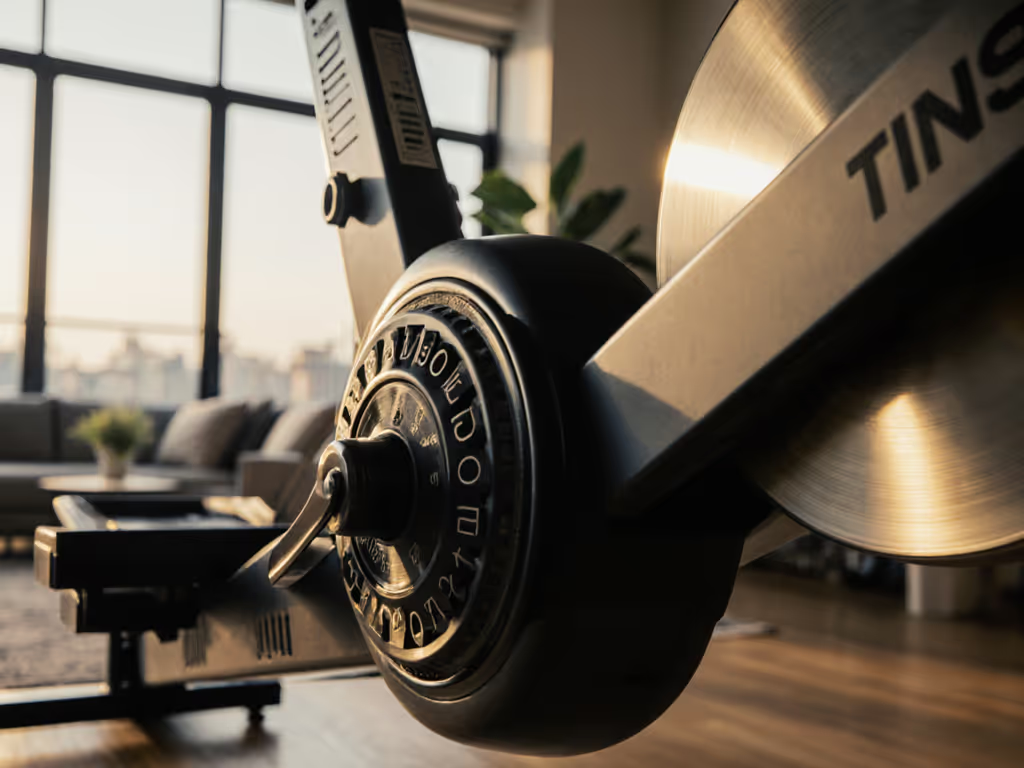
The rowing machine damper setting is perhaps the most misunderstood control on the ergometer. Most people believe cranking it up increases the work they're doing, and therefore the results. They're half right. Understanding the distinction between damper-controlled air resistance and actual effort is the foundation of smart rower training and, more importantly, sustainable long-term practice.
The Damper Doesn't Control Your Workout: It Controls How Resistance Feels
Let's establish the critical fact upfront: the damper lever (ranging from 1 to 10 on most machines) modulates how much air flows into the flywheel, not the total work you produce. For a deeper dive into how air, water, magnetic, and hydraulic systems compare, see our lab-tested rower resistance comparison. This is where the confusion begins. When you pull the damper to 10 (fully open) you're allowing maximum airflow, which creates higher air resistance and slows the flywheel faster during recovery. Conversely, a damper setting of 1 restricts airflow, letting the flywheel spin freely with minimal braking force.
The real intensity comes from how hard and fast you pull. You could produce identical power output at damper 3 or damper 8, as long as your stroke rate and force remain constant. The damper simply changes the sensation and rhythm of the movement, making each pull feel heavier or lighter, quicker or more controlled.
This distinction matters because it reframes how you approach machine setup, maintenance expectations, and long-term cost per session. When you know the damper is about feel, not intensity, you stop chasing a higher number and start matching settings to your actual training need.
Damper vs. Resistance: What's Actually Happening
| Damper Setting | Airflow | Drag Factor Range | Stroke Feel | Recovery Speed |
|---|---|---|---|---|
| 1-3 (Low) | Restricted | ~90-130 | Light, quick recovery | Flywheel slows gradually |
| 4-6 (Moderate) | Balanced | ~130-160 | Balanced effort and speed | Moderate braking |
| 7-10 (High) | Fully open | ~160-210+ | Heavy, forceful | Flywheel brakes quickly |
The drag factor is the machine's quantified measure of air resistance at a given damper setting. A new Concept2 RowErg, for example, measures around 90 at damper 1 and climbs to about 210 at damper 10. This data matters: it gives you reproducible benchmarking. If you know your optimal drag factor for a particular distance (say, 120-135 for a 500m-2k piece) you can dial in the damper once and trust the numbers across sessions.
Resistance, in the colloquial sense, is what you feel pulling the handle. A higher damper creates a heavier sensation because the flywheel resists deceleration more aggressively. But that sensation doesn't automatically mean you're doing more work. A lightweight, fast-cadence row at damper 3 can demand more cardiovascular and metabolic effort than a sluggish, low-power row at damper 9.
Skill, Form, and Damper Strategy
Damper selection changes by experience level and training goal, not by "maximum is best."
Beginners and Form Focus If you're new to rowing or refining your technique, start lower: damper 1-3. The lighter resistance forces a higher cadence and reduces the temptation to muscle the handle with arm strength alone. You learn to drive with your legs, maintain rhythm, and groove the movement. To lock in fundamentals, follow our Proper Rowing Form guide. Once your technique is locked, you can explore higher settings. This progression protects your shoulders and knees, and it reduces maintenance hassles down the line. A clean stroke means less wear on bearings and seat rollers.
Intermediate Training (Endurance + Strength) A damper setting of 4-6 offers a balanced middle ground. Most steady-state aerobic work (20 to 45 minute sessions) lands here. The feel is forgiving, which matters for consistent practice. Consistency, not intensity peaks, is how you rack up sessions and drive down cost per workout. I learned this the hard way on a scuffed Craigslist rower: the cheaper machine that got used five times a week outpaced the premium model gathering dust. The ledger of sessions, not the price tag, told the real story.
Short, High-Power Intervals For efforts under 500 meters or max-effort repeats, damper 7-8 is common in competitive rowing. The heavy feel forces power application and mimics the loading of a real boat on water. But again: the damper is the vehicle, not the engine. Your power output (measured in watts or splits) is the engine. The damper just changes how the power transmits and feels.
The Cost-Per-Session Math Behind Damper Wisdom
Why does damper selection matter to durability and long-term value? Because improper damper choice leads to form breakdown, which accelerates wear.
A beginner hammering a high damper setting often compensates with upper-body muscle, increasing impact on the handle, seat, and footplate. Over 100-200 sessions this rough handling taxes bushings, rollers, and the frame connection points. A rower maintained at logical damper settings (matched to skill and intent) experiences less shock loading. The seat tracks smoothly, the chain stays centered, the handle grip endures.
Maintenance intervals scale with durability. Use our all-types rowing machine maintenance guide to set a simple schedule and keep performance consistent. A machine rowed cleanly at appropriate damper settings needs fewer part replacements, fewer service calls, and fewer hours of troubleshooting. Pay once, maintain smartly, and your rower pays you back (in sessions, not hype). The damper lever is part of that equation: it's a tool to match the machine to your ability, not a trophy to maximize.
Finding Your Optimal Damper Setting
Start with this framework:
- Set a baseline damper (typically 5 for most people with moderate technique).
- Complete 5-10 easy pulls to establish your drag factor on the monitor. If you're using a PM5 or iFIT display, see our PM5 vs iFIT monitor accuracy comparison to interpret drag factor readings.
- Match to your goal:
- 2k and longer: 105-120 drag factor (damper 4-6)
- 500m-2k: 120-135 drag factor (damper 5-7)
- Under 500m: 135-150 drag factor (damper 7-8)
- Adjust by one increment and re-test until the drag factor lands in your target range.
- Row at least 3-5 sessions before switching, so your nervous system adapts and you can evaluate the feeling accurately.
What to Avoid
- Never default to damper 10. It's the marketing max, not the optimal setting. Higher damper settings amplify poor technique, increasing injury risk and part wear.
- Don't confuse "heavier" with "better." A lighter damper at high power output beats a heavy damper at low power output every time.
- Don't skip the drag factor check. Two machines with the same damper setting may have different drag factors due to age or maintenance. The number on the monitor is your truth.
The Takeaway: Feel Serves Your Training, Not the Reverse
The rower damper lever is not a rank of intensity: it is a tuning knob for training specificity. You're matching the machine's feel to your fitness level, your technique maturity, and your session goal. Lower damper settings demand speed and rhythm. Higher settings demand power and patience. Both are valuable; neither is objectively "better."
Once you internalize this distinction, your setup becomes intentional instead of random. You stop seeking the mythical perfect setting and start owning the one that serves your session. You notice your form staying cleaner longer, your equipment lasting longer, and your cost per reliable workout trending downward.
Next time you approach a rower, dial in your damper according to your goal (not your ego). Test it with a few pulls, confirm the drag factor on the monitor, and then execute the workout. That small discipline compounds into better form, less maintenance anxiety, and the kind of equipment longevity that actually rewards your investment over time.
Related Articles
Training, Technique & Benefits
Rowing Drag Factor: Precision Over Damper Settings
24th Apr•11 min read
Training, Technique & Benefits
Rowing for Seniors With Balance: Safe Modifications
31st Mar•10 min read
Training, Technique & Benefits
Rowing Rehabilitation Protocols: Knee and Hip Recovery
23rd Mar•9 min read