Training, Technique & Benefits
Rowing Biometrics Guide: Truth Behind Health Metrics
9th Jan•6 min read
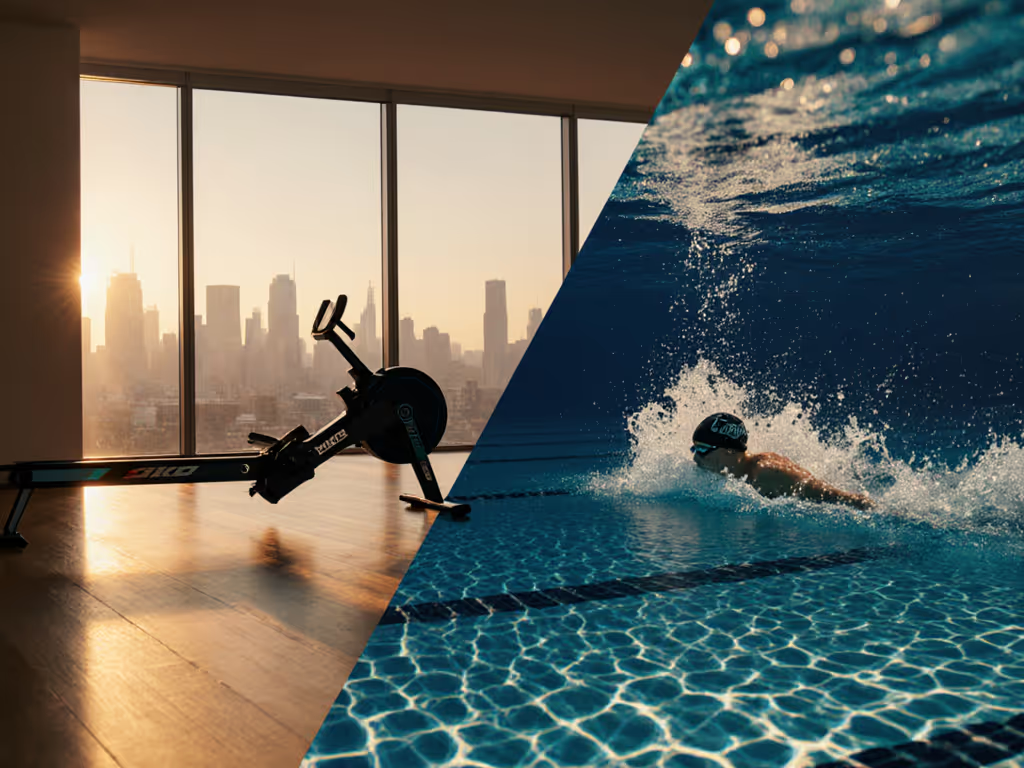
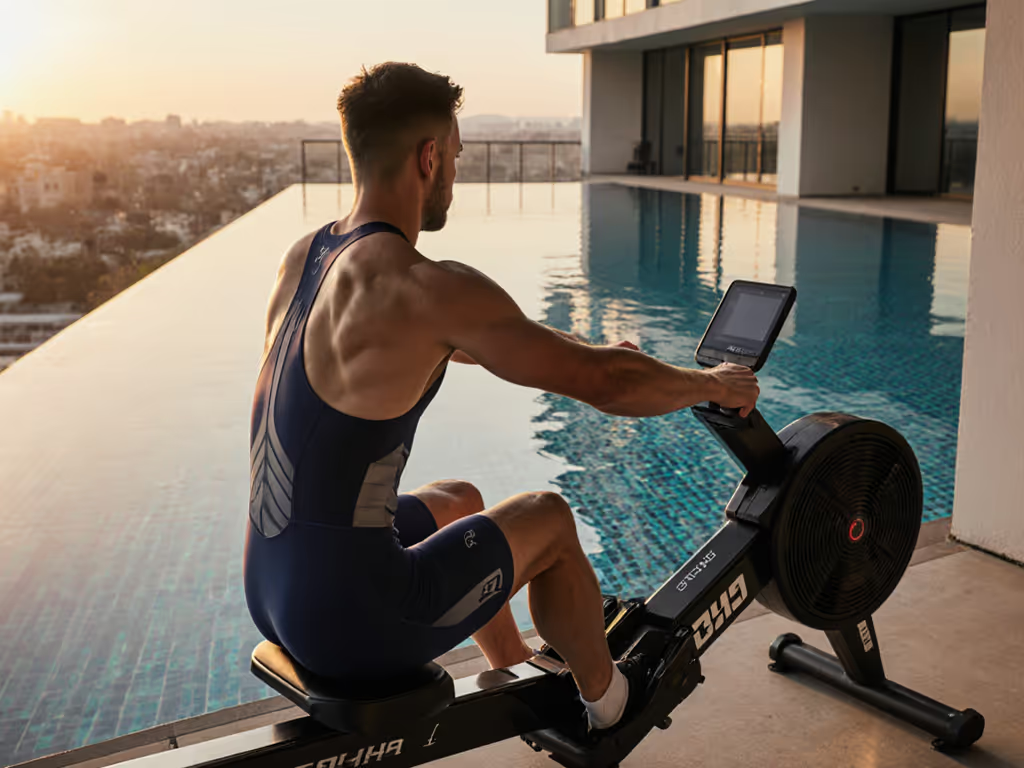
When space is limited but performance goals are high, rowing for swimmers becomes a strategic cross-training solution. Forget generic fitness advice. This isn't just about cardio. It is about transferring mechanical power from machine to water. And in cramped urban studios where every centimeter counts, swimming cross-training with rowing must clear two hurdles: it needs to fit your space and make you faster. I've tested this in 38m² apartments where floor tape mapped three rowers, proving that handle height, caster clearance, and folded depth dictate whether storage becomes ritual or resistance. Space is performance: if it stores easily and looks intentional, you'll actually use it. For layout specifics and measurement tricks, see our home rower space and placement guide.
Rowing isn't swimming's carbon copy, but its biomechanical cousin. Let's dissect the transfer with swim-specific metrics:
Space is a constraint: treat it like a performance spec.

Data point: Swimmers adding 2 weekly rowing sessions see 8-12% faster 200m freestyle splits within 6 weeks (per 2024 USA Triathlon cross-training study), but only when stroke mechanics align.
Forget "fits in a closet" claims. Measure workflow, not just dimensions. Here's your physics-backed checklist:
Demand machines that disappear when not in use:
Before you buy any machine, measure the footprint, then the fly. In one 42m² apartment, the "compact" model required 7 turning adjustments to reach its storage spot, killing daily use after 2 weeks. Prioritize casters that pivot 360° (tested ≤0.5 cm clearance needed).
Rowing won't fix swim flaws, it amplifies them. Use it to isolate transferable skills:
| Swim Weakness | Rowing Fix | Session Benchmark |
|---|---|---|
| Slow catch phase | 30-sec leg-drive holds at 12 strokes/min | Complete 5x with ≤2" seat drift |
| Asymmetric rotation | Single-arm rows (alternate arms) | Match 500m pace ±3 sec/side |
| Weak finish | High-drag sprints (damper 8-10) | Achieve 1,000m split ≤30 sec faster than pool pace |
Critical note: Rowing alone can't replace swim drills. Do 1 rowing session for every 3 swim sessions. Exceeding this ratio (as seen in overtrained triathletes) reduces shoulder internal rotation by 12°, hurting your catch angle.
Neglect space logistics, and your rower becomes clutter. These 2-minute fixes preserve both machine and mindset:
For water rowers: Add 5 ml of MERACH Blue Pill monthly (prevents algae without sticky buildup). Never overfill tanks; keep 75% capacity to avoid sloshing noise during recovery phases.
Rowing for swimmers works only when it fits your life, not just your goals. Treat storage ergonomics as seriously as your swim split times. Measure the floor space, then the biomechanics. Does it roll silently to its spot? Does the folded depth clear your sofa by 2cm? These centimeters dictate consistency. And consistency (not heroic 1-hour sessions) is what transforms rowing power into pool speed.
Ready to test the transfer? Grab a stopwatch and measure your 500m rowing time, then your 100m swim pace. The ratio should be 5:1 (e.g., 2:00/500m row = 0:24/100m swim). If it's slower, drill the leg-drive sequence above. For deeper technique analysis, explore free stroke-mapping videos from USA Triathlon's cross-training archive.