
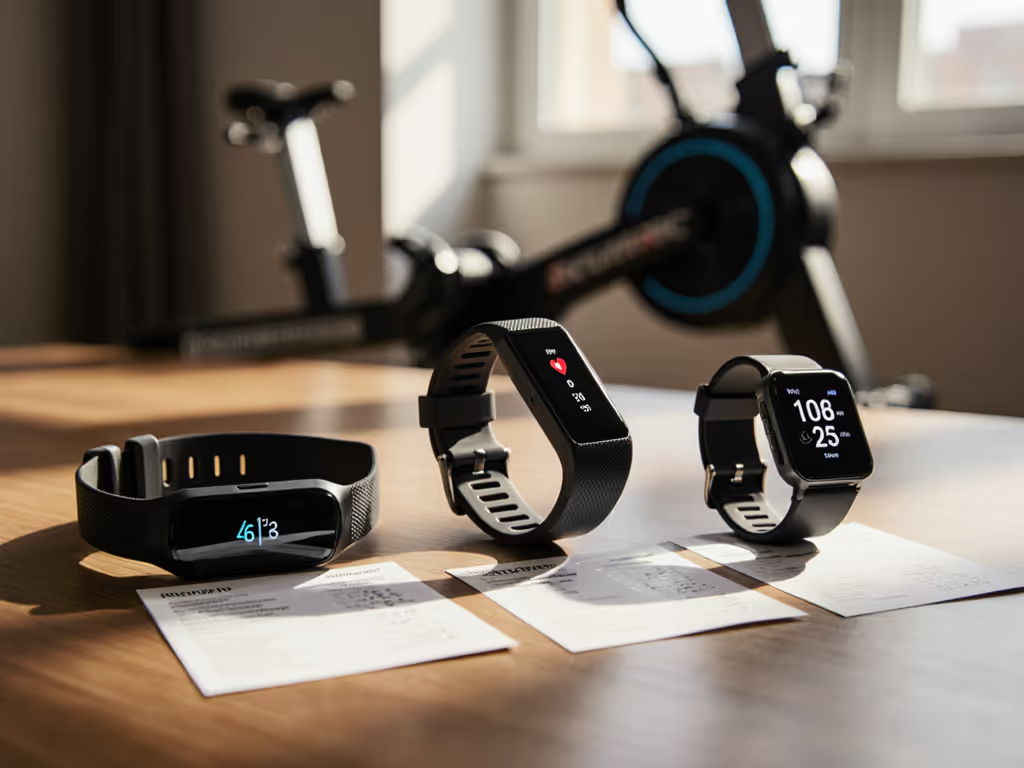
Rowing Machine Cardio: Resistance Types & Calorie Burn
By Aaliyah Mensah • 27th Feb
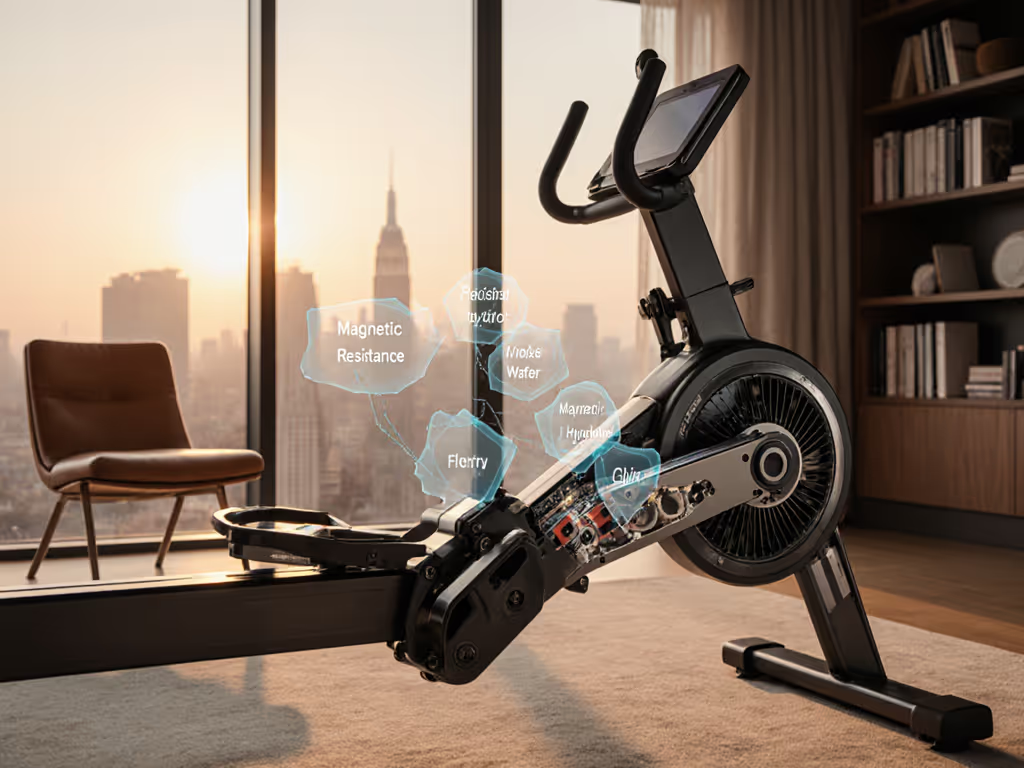
Rowing machine cardio burns calories differently depending on your resistance type, and understanding this relationship is crucial to matching the right machine to your body, space, and budget. For an at-a-glance breakdown of noise, feel, and upkeep across air, water, magnetic, and hydraulic, see our rower resistance comparison. The resistance mechanism you choose doesn't just change how a workout feels; it fundamentally alters the metabolic response to rowing resistance and long-term durability, which affects both what you'll spend upfront and what that machine will cost you over years of ownership.
How Resistance Type Shapes Calorie Burn and Metabolic Demand
The core insight: calorie expenditure on a rower is driven by power output (the wattage your muscles must generate against resistance). Different resistance types create resistance differently, which changes how your cardiovascular and metabolic systems respond to the same perceived effort.
With air resistance, power output scales directly with your stroke rate and force. The harder and faster you row, the more air the flywheel must push through, and the more resistance it encounters[1]. This creates what researchers call dynamic resistance (your body constantly adapts to increasing drag, triggering higher metabolic demand[6]). If you row at an easy pace, the machine feels light; if you sprint, it becomes brutally hard. Your metabolism responds to the real-time demand curve you create. If you use an air rower, understand how the damper setting changes feel versus effort so you program intensity correctly.
With magnetic resistance, the relationship is inverted. You set a fixed resistance level via a knob or dial, and that level remains constant regardless of your stroke rate[2][4]. Row slowly or row fast, the resistance doesn't change until you manually adjust it. This consistency means your metabolic response is more predictable and repeatable, making it easier to structure intervals at precise wattage targets[2]. However, if you want to increase intensity, you must pause and adjust the dial; you cannot dynamically ramp up simply by rowing harder.
Water resistance operates like air resistance: it's entirely user-dependent[2]. The faster and harder you pull, the more resistance the water creates in the tank[2][3]. This produces a fluid, almost organic metabolic response that closely mimics on-water rowing[6]. The resistance curve feels natural because it matches how bodies actually experience drag in real rowing.
Hydraulic resistance, used in compact piston-based machines, creates consistent, modest resistance via fluid or air compression in cylinders[1][3]. Like magnetic rowers, it's predictable but offers less dynamic range and typically lower peak power output, which may limit calorie burn ceiling for advanced users[1].
Unpacking the Most Effective Rowing Resistance for Your Metabolism
The "most effective" resistance type is not universal; it depends on your training goals and lifestyle constraints. Here's the TCO math:
Air Resistance: Dynamic Metabolic Demand, Higher Maintenance Load
Air rowers excel for interval training and power-based work because resistance scales with intensity[1][3]. You can spike metabolic demand rapidly without fiddling with settings. However, air machines require consistent maintenance: the flywheel bearings wear from constant friction, and the damper wheel blades can accumulate dust, affecting smoothness[3]. Over five years, you'll likely replace bearings ($50-150 per set, labor included if sent for service) and may refinish or replace the damper material ($100-300). Parts are widely available for popular models like Concept2, which supports long-term value retention, but you'll need to budget service cycles into your TCO model[1]. See why the Concept2 RowErg holds value and remains the benchmark for long-term durability.
Magnetic Resistance: Quiet, Predictable, Virtually Maintenance-Free
Magnetic machines create resistance via opposing magnetic fields with no moving contact between components[2][4]. This means minimal wear, no bearings under load, and virtually no maintenance[5]. From a durability and cost-per-session perspective, magnetic rowers often deliver the lowest long-term friction. The trade-off: the metabolic stimulus is less dynamic, and you sacrifice the explosive power-building feel of air or water machines[6]. For steady-state cardio or intervals you manually control, magnetic machines justify their value. The Eddy current mechanism is also extremely quiet (a critical advantage if you're rowing before dawn in an apartment above a light sleeper[2]).
Water Resistance: Immersive Feel, Moderate Maintenance Burden
Water rowers produce a metabolic response that matches air machines in responsiveness (harder rowing = harder resistance) while delivering a sound and sensory experience many find therapeutic[3]. The trade-off: water tanks require regular monitoring for bacterial growth or mineral buildup, especially in hard-water regions[3]. You'll need to drain and refill periodically, add water treatments, and watch for seal degradation. Over a decade, you may replace tank seals ($100-250, depending on the model). Water rowers are heavier and bulkier, which affects resale logistics and space usage[2][1]. However, their premium positioning typically means better warranty coverage and parts availability through the manufacturer.
Hydraulic Resistance: Budget-Friendly, Limited Longevity
Hydraulic machines are compact and cheap ($200-500), but the fluid-filled cylinders are sealed and non-serviceable[3][4]. Once the fluid degrades or seals fail, the machine is often discarded rather than repaired. From a depreciation curve perspective, hydraulic rowers drop faster and are harder to resell, which inflates true cost-per-session over time[1]. They work for occasional light cardio, but they're poor value if you're planning consistent, long-term use.
Linking Resistance Type to Sustained Use and Durability
I once tracked every dollar and maintenance session on a scuffed Craigslist rower (chain replacements, bushing failures, seat roller wear), and watched cost per workout drop below a studio class fee only because the frame and fundamental mechanism held up. That ledger taught me a hard lesson: pay for the metal and bearings, not the marketing.
This applies directly to resistance type selection. For step-by-step upkeep across all resistance types, see our comprehensive maintenance guide. Air and magnetic machines, from established manufacturers, come with accessible service paths: replacement parts are stocked, tutorials exist online, and independent technicians can often repair them[1][5]. Water rowers from premium brands offer strong warranty coverage, but service is more centralized and can be slower. Hydraulic machines have no real service path; they're effectively disposable.
From a neighborhood harmony perspective, magnetic machines win decisively. For measured decibel and vibration comparisons across popular machines on different floors, check our apartment rower noise tests. They operate at 50-60 decibels (roughly quiet office noise), while air machines hit 70-80 decibels due to flywheel fan noise[1][2]. If floor vibration is a concern in an older building, a magnetic rower on an isolation mat will transmit far less low-frequency energy than an air machine.
Choosing Your Resistance Type: A Decision Framework
Map your choice to three factors:
- Noise sensitivity → Magnetic or hydraulic. If shared walls or sleeping children matter, prioritize magnetic for maintenance-free quiet operation.
- Space and storage → Hydraulic (most compact) or water (foldable options available). Air machines are largest and hardest to store upright safely.
- Long-term metabolic progression → Air or water. If you plan to increase intensity over months, dynamic resistance supports natural power scaling.
- Maintenance tolerance and budget depth → Magnetic (lowest friction) or water (moderate, predictable). Air requires skill and parts sourcing. Hydraulic requires replacement.
- Resale and TCO confidence → Air (Concept2 models hold value) or water (premium brands). Magnetic mid-market machines hold value well if from established brands.
Final Verdict
The best rower exercise machine is the one you'll use consistently and afford to maintain. Calorie burn correlates most tightly with your effort, not the resistance type, but resistance type determines whether that effort feels sustainable, sounds acceptable to your household, and remains cost-effective over five years.
For apartment dwellers and noise-conscious users: magnetic resistance delivers most effective rowing resistance for peace and durability. For athletes chasing power adaptation and dynamic metabolic demand: air or water machines justify the added complexity. Pay once, maintain smartly, and your rower pays you back (in workouts, data, and resale value that makes sense on a spreadsheet).
Related Articles
Comparisons & Buying Guides
Adaptive Rowers for Parkinson's: Balance & Tremor Focus
30th Jan•7 min read