Training, Technique & Benefits
Rowing for Seniors With Balance: Safe Modifications
31st Mar•10 min read
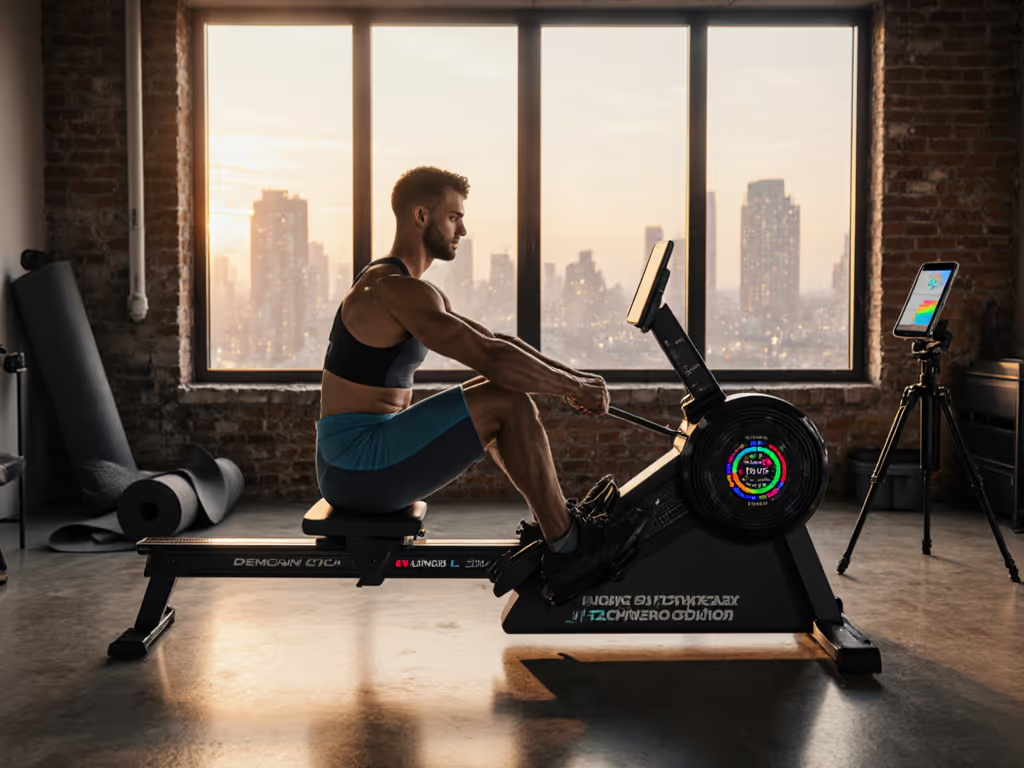
If you train combat sports (boxing, MMA, or wrestling), you already know that explosive power separates decisive athletes from those who fade. Yet many fighters miss one of the most efficient tools for building that power: rowing for combat sports. Rowing doesn't just build cardiovascular resilience; when programmed correctly, it develops the leg-driven explosiveness that translates directly to clinch work, takedown speed, and sustained combinations. For fight-specific programming details, see Rowing for Martial Artists for joint-safe power and round-ready endurance.
The science backs this. Research confirms that rowing is 60% legs, 20% trunk, and 20% arms, meaning your lower body is doing the heavy lifting. That biomechanical reality makes explosive power rowing training a natural fit for any combat athlete managing limited training time and space at home.
Standard cardio builds volume, but combat sports demand power (the ability to generate force quickly). Rowing, especially when programmed with high-intensity intervals, builds both. When you dial in technique, you can generate significantly more power with the same or even less perceived effort. That means faster, harder strikes and takedowns without burning out as quickly.[1]
The legs contain your largest and strongest muscle groups, making them the primary engine for rowing power.[1] For combat athletes, this is crucial. Explosive leg power underpins clinch dominance, footwork speed, and the ability to generate force through your entire body in a strike. The leg drive phase of the rowing stroke teaches you to accelerate through the movement rather than apply consistent force (a pattern that mirrors the explosive ramp-up needed in a takedown or heavy combination).
Three protocols stand out:
Power 10 Strokes: Start rowing at a normal pace for 60 seconds, then execute ten maximally explosive strokes, then slowly return to a moderate pace for 60 seconds, and repeat for 10 rounds.[3] This teaches your nervous system to recruit fast-twitch fibers on demand (exactly what happens when you need a burst of speed mid-round). If you prefer structured intervals, try these compact rowing HIIT workouts that stay quiet for apartment training.
Interval-Based Loading: Research indicates that peak power is generated when athletes move about 30% of their 1-rep-max load as fast as possible.[5] On the rower, this translates to using moderate resistance (not maximal drag) and focusing on speed and acceleration rather than brute force. The result is more power without overloading joints.
Supplemental Plyometrics: The squat jump reinforces knee and hip extension (a key component of the drive phase and lower-body power development).[4] Many combat coaches pair 2-3 sessions of rowing with weekly squat jump circuits to amplify explosive returns.
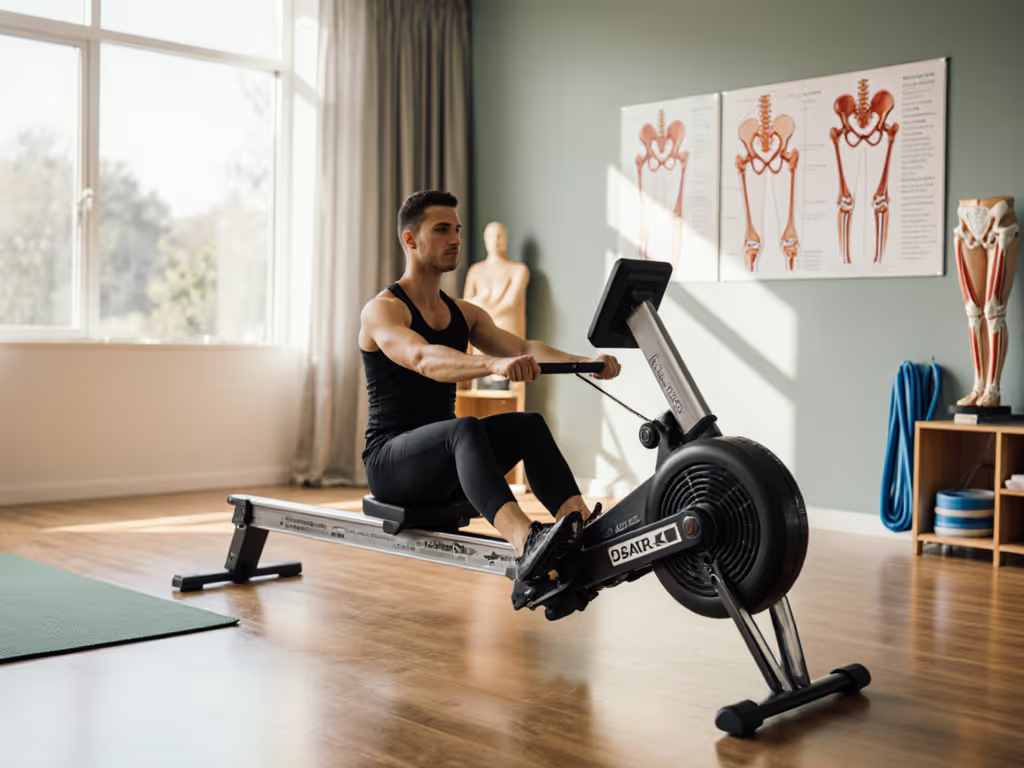
The rowing stroke has four phases. The catch is where each stroke begins: knees bent, shins vertical, arms extended forward.[1] Though no power is applied yet, a proper catch sets you up for an effective drive, your body coiled like a spring, ready to unleash energy.
Proper leg drive begins with that strong catch position. Press evenly through your entire foot and accelerate throughout the extension rather than applying a consistent force.[1] This acceleration pattern transfers more power to the machine and creates a more efficient stroke. Even at lower stroke rates (18-20 strokes per minute), you can generate tremendous leg power with proper technique; in fact, lower rates often allow for better power application by giving you time to push completely through the leg drive.[1] Dial in stroke rate with data-driven cadence protocols matched to power goals.
Aim for a continuous power curve that peaks around 45-47% of the stroke, ideally shaped like the final moments of a sunset, with a gradual rise to a peak.[1] Learn how to read and improve your rowing force curve to apply power at the right moment. That smooth power transfer is what keeps you strong deep into a round.
Here's where the isolation starts for many rowers: a machine with solid technique and good resistance can still trap you in a single app ecosystem. I once relied on a paid training app that worked flawlessly, until a firmware update broke sync mid-interval. My data siloed overnight, my sessions desynced, and I was locked out of my own workout history.
That experience taught me that open beats closed when your data fuels long-term habits. When you select a rower, verify that it uses Bluetooth FTMS (Fitness Machine User Data Service) or ANT+ protocols. These open standards ensure your metrics flow to Apple Health, Strava, and Garmin without forced subscriptions or recurring $30-$45/month content fees. See our hands-on tests of FTMS and ANT+ rowers to pick hardware with true data freedom. You want to be able to export your session data locally, sync to the fitness platform of your choice, and own your training history.
Test the sync before you trust the ecosystem. Pair the rower with your smartwatch or HR strap using Bluetooth FTMS, row a 5-minute session, and verify that power, splits, and heart rate appear in your chosen health app within 30 seconds of finishing. Check whether the rower supports both Bluetooth and ANT+ (ANT+ is more stable in crowded RF environments). Confirm that firmware updates happen in-app and don't require tethering to a separate device or subscription.
A rower that desyncs or forces you into a proprietary app is a rower that will frustrate you when you need data continuity across your training year.
Most combat conditioning programs benefit from 2-3 rowing sessions per week, mixing steady-state endurance rows (20-40 minutes) with interval work (Power 10 Strokes, short bursts). This frequency builds aerobic base without overloading joints and leaves space for strength, skill work, and recovery.
Air and magnetic resistance rowers offer the quietest, most feedback-rich experience. Air resistance (fan-driven) gives immediate feedback on effort and mimics the "rowing" feeling most closely. Magnetic resistance is typically quieter and adjusts across multiple levels, supporting both beginners and advanced users.[3] Water resistance is authentic but louder and heavier, less ideal if you live in an apartment or share walls with neighbors sensitive to vibration.
Rowing complements strength work by building explosive leg power and work capacity without competing for the same muscle groups as heavy squat or deadlift days. Schedule rowing on days between strength sessions or use it as a finisher (5-10 minutes of interval work post-lift). The key is tracking your metrics across platforms so you can spot correlations between rowing power and combat performance, like clinch speed, takedown tempo, or combination output.
Explosive power rowing is a data-backed, space-efficient way to build the force-generating capacity that combat athletes need. Prioritize machines that support open protocols (Bluetooth FTMS / ANT+), integrate cleanly with your wearables and health apps, and let you own your session history. Master the leg drive, rotate between power-focused protocols (Power 10 Strokes, tempo intervals), and track metrics consistently. Test the sync before you commit, and you'll have a training tool that scales with your career: no app lock-in, no forced subscriptions, just your data and your progress.
If you're ready to build explosive power on a rower, start by auditing the protocol compatibility of the machines in your price range. Request a trial or demo if possible, and verify Bluetooth FTMS and ANT+ support before purchase. Review the warranty, resale potential, and whether the vendor publishes firmware release notes, that transparency signals how seriously they take data integrity and user control. From there, program 8-12 weeks of structured intervals alongside your combat training and track your splits, power curve, and recovery metrics in your chosen health platform. As you log sessions, look for patterns: which rowing protocols correlate with improved clinch speed or striking tempo? That feedback loop is where rowing becomes a true competitive edge.