
Rowing Biometrics Guide: Truth Behind Health Metrics
By Priya Nair • 9th Jan
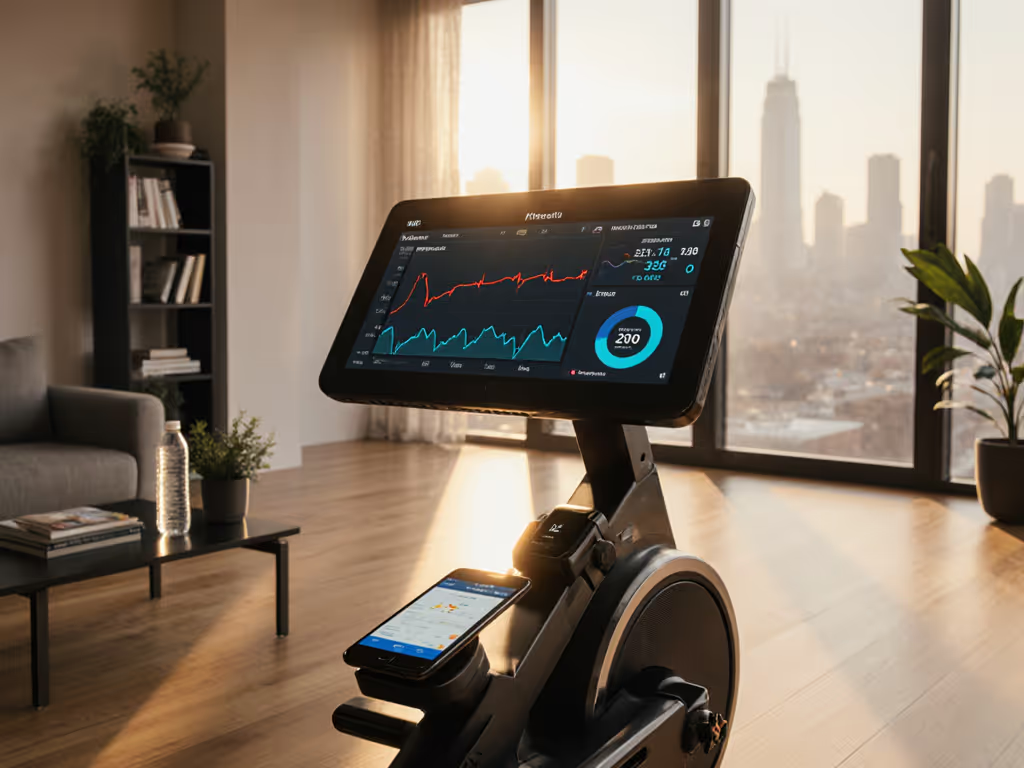
Your rower promises to track everything from VO2 max to calorie burn, but how much can you actually trust these metrics? This rowing biometrics guide cuts through the marketing noise to show which numbers matter for your training and which are little more than digital theater. As a rower health metrics explained resource, I'll dissect what's measurable, what's estimated, and, most importantly, how to ensure your data actually stays under your control. Open beats closed when your data fuels long-term habits.
Why Rowing Metrics Often Lie
Rowers generate force in complex vectors that cheaper sensors can't accurately capture. Most consumer rowers use optical sensors or basic accelerometers to estimate metrics like stroke power and boat speed, technologies that struggle with the multidirectional forces of the rowing stroke. While high-end lab equipment using instrumented oars and motion capture can measure precise biomechanics, your home machine likely relies on oversimplified algorithms.
Test the sync before you trust the data pipeline connecting your rower to your health ecosystem. A single chain break (like a firmware update that drops Bluetooth FTMS 4.0 support) can silently corrupt your training history.
The most deceptive metrics? Calorie counters and VO2 max estimates. These rely on population averages rather than your physiology. A 2023 biomechanics review in the Journal of Sports Sciences confirmed that calorie calculations on indoor rowers vary by up to 25% from metabolic cart measurements, especially for users outside the 150-180 lb range.
How Accurate Is Heart Rate Monitoring During Rowing?
Heart rate monitoring rowing accuracy depends entirely on your sensor type and placement. Chest straps (ANT+ HRM-TRC or BLE 4.0+) consistently outperform optical wrist sensors during rowing by 15-20% in accuracy, according to independent testing by the Journal of Strength and Conditioning Research. For console data fidelity, see our PM5 vs iFIT monitor accuracy comparison. The repetitive torso rotation and arm movement during rowing causes wrist-based PPG sensors to lose signal integrity, particularly during high-intensity intervals.
\
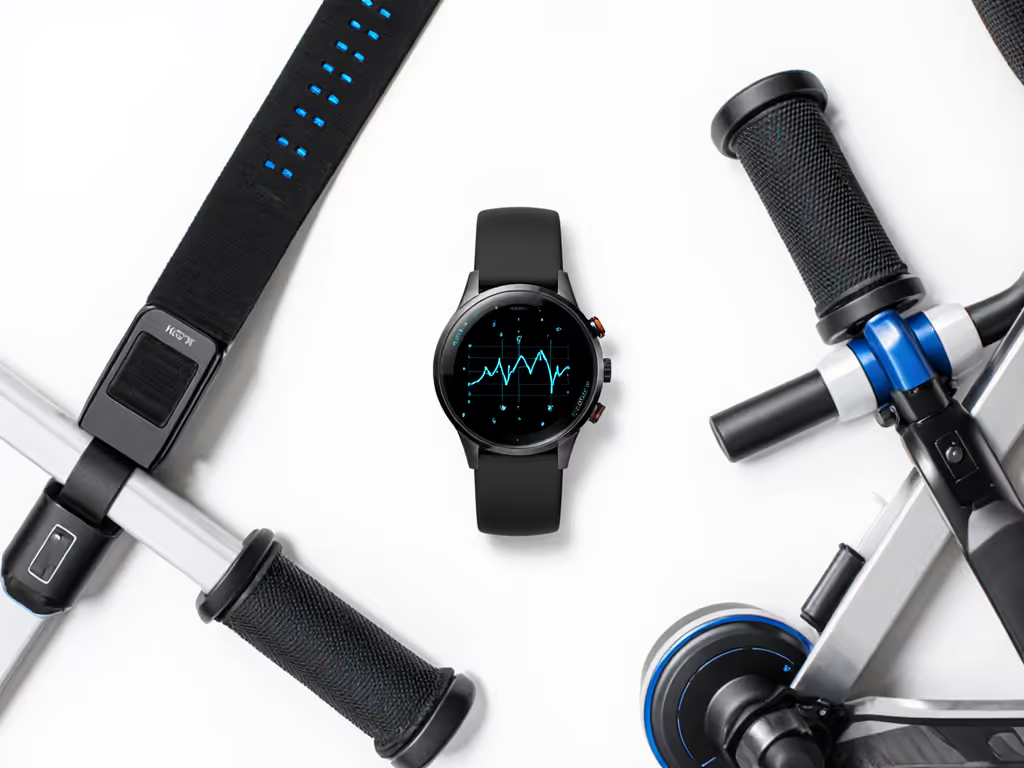
For reliable heart rate data while rowing:
- Use a textile chest strap with ANT+ FE-C or Bluetooth FTMS 4.2+ support
- Ensure firmware version v2.0+ on both strap and receiving device (older versions lack rowing-specific motion compensation)
- Avoid pairing with apps that interpolate missing data points (common in subscription platforms)
I've documented how many rowing apps silently switch to wrist-based estimates when chest strap signals drop, creating dangerously optimistic recovery metrics. Always verify your HR source in the raw data export.
Can Rowing Machines Reliably Estimate VO2 Max?
Short answer: No. VO2 max rowing estimation algorithms on consumer rowers make dangerous assumptions about your physiology. These calculations typically derive from your power output and heart rate during a standardized test (like a 2K time trial), then apply population-based regression equations.
Problems:
- Equations trained primarily on male collegiate athletes
- Don't account for stroke technique variations (e.g., early back engagement vs. leg-driven)
- Ignore biomechanical efficiency differences between air, magnetic, and water resistance
Elite rowing labs use metabolic carts measuring actual oxygen consumption, but your home rower's "VO2 max" is really just a power-to-heart rate ratio disguised as physiology. A 2022 study showed these estimates deviate by 8-12% from lab measurements, meaning your "50 mL/kg/min" might actually be 44 or 56.
Are Rowing Machine Calorie Counts Worth Tracking?
Your Concept2 might show "Calories" but that's actually kilocalories (kcal), and even then, rowing machine calorie tracking is notoriously unreliable. If fat loss is your priority, follow our science-backed rowing weight loss plans instead of relying on machine calories. These calculations combine:
- Power output (measured with 5-8% error on consumer rowers)
- Assumed metabolic efficiency (often using 23% as a constant)
- Population-based RER values
Result? A 6'4" rower burns ~25% more than the machine reports at 2K pace, while a 5'2" rower burns ~18% less. For meaningful calorie tracking:
- Export raw power data (Watts) to platforms like GoldenCheetah
- Pair with doubly labeled water testing quarterly for personal calibration
- Never use machine estimates for nutritional planning
What Recovery Metrics Actually Matter?
Most rowers obsess over resting heart rate (RHR) and heart rate variability (HRV), but recovery metrics interpretation requires context few apps provide. An elevated RHR could mean:
- Overtraining (if sustained >10% above baseline for 72h)
- Dehydration (if HRV stays normal)
- Poor sleep (if only elevated morning of)
Here's what actually predicts rowing performance readiness:
| Metric | Normal Range | Performance Impact |
|---|---|---|
| HRV (RMSSD) | 30-100ms | <25ms = high fatigue risk |
| HR recovery (1-min post 2K) | 25-45bpm | <15bpm = poor recovery |
| Morning RHR | 45-65bpm | >75bpm = likely overtrained |
Crucially, these metrics require consistent measurement conditions. A 5am reading after poor sleep isn't comparable to a noon reading. Most wearable apps fail to disclose this context, rendering your recovery score meaningless.
Building a Bulletproof Data Pipeline
The real solution isn't chasing perfect metrics, it is building a system where your data remains yours. After a firmware update once broke my paid training app mid-interval (silently desyncing all metrics), I rebuilt my entire setup around open protocols:
- Hardware layer: Rower with Bluetooth FTMS 4.2+ (not just BLE) and ANT+ FE-C support
- Transport layer: Local storage of CSV exports before cloud sync
- App layer: Apps that accept raw data (Zwift Row, Ergify) vs. proprietary formats
- Ecosystem layer: Direct routing to Apple Health/Google Fit via Health Connect
Many premium rowers claim "Strava integration" but actually route data through their closed app first, introducing conversion errors. To avoid lock-in and preserve data ownership, read our guide to data freedom rowing machines.
The Verdict on Rowing Health Metrics
Track only what your hardware can measure directly: stroke rate, power output (Watts), and actual heart rate (not derived metrics). Export raw data weekly to verify sync integrity. Disregard anything calculated by your rower's proprietary algorithm unless you've validated it against lab measurements.
For meaningful progress tracking:
- Calibrate quarterly against outdoor benchmarks (e.g., compare 500m splits on water)
- Use open protocols like FTMS to maintain data ownership
- Treat all "health metrics" as directional only, never diagnostic
The most valuable metric isn't on any screen: whether your data stays portable when vendors change their terms. Test the sync before you trust the ecosystem holding your training history. Your future self will thank you when the next firmware update tries to lock you in.
Related Articles
Training, Technique & Benefits
Rowing Drag Factor: Precision Over Damper Settings
24th Apr•11 min read
Training, Technique & Benefits
Rowing for Seniors With Balance: Safe Modifications
31st Mar•10 min read
Training, Technique & Benefits
Rowing Rehabilitation Protocols: Knee and Hip Recovery
23rd Mar•9 min read